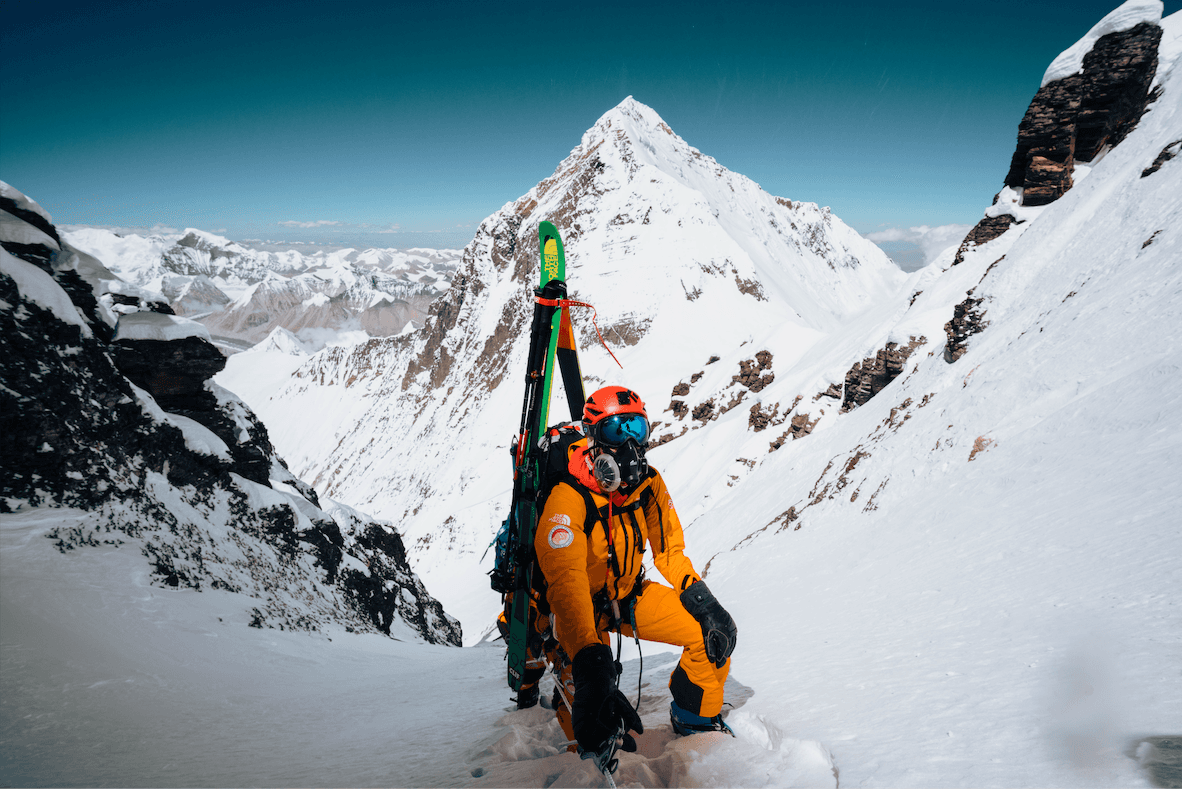
There's a thing that happens on a ridgeline at 28,000 feet. Your hands are numb. The wind is trying to knock you sideways. Every part of your brain is telling you to clip in, hold on, stop moving.
That's the moment I pull the camera out.
It took me years to understand this, but it's the single most important instinct I've developed as a filmmaker. When I'm the most scared or uncomfortable — that is the moment I need to keep filming.
Fear and documentary work share the same muscle
In documentary, you don't get to call cut. The moment is happening whether you're ready or not. Someone breaks down in an interview. A conversation turns somewhere nobody expected. The light shifts and suddenly the room feels different.
Your instinct is to freeze. To wait. To let it pass and get back to the plan.
But the plan isn't where the footage lives. The footage lives in the unscripted moment — the one that makes you uncomfortable because you're not sure if you should be filming it. That discomfort is the signal. It means something real is happening.
Lhotse taught me this in the most literal way possible
On a The North Face expedition to Lhotse with Jim Morrison and Hilaree Nelson, I was filming on the fourth highest mountain in the world. Nearly 28,000 feet. The air has about a third of the oxygen you're used to. Your body is shutting down functions it considers non-essential — fine motor skills, clear thinking, the ability to feel your fingers on the record button.
There were moments on that expedition where I genuinely did not want to take my hands out of my gloves. Where the exposure on a ridge was real — not cinematic stakes, actual life-and-death stakes. And in those moments, the only thought that kept the camera rolling was this: if I stop now, this is gone forever. Nobody is coming back up here to reshoot.
That's the discipline. Not bravery. Just the understanding that the moment won't wait for you to feel ready.
The interview room works the same way
People think expedition filming and sit-down documentary work are completely different. They're not. The emotional mechanics are identical.
On a ridge, the fear is physical. Exposure, wind, altitude. Your hands don't want to hold the camera. But if you put it away, you lose the thing that makes the audience feel like they're standing there with you.
In an interview, the fear is emotional. Someone's being vulnerable. You're not sure if you should keep rolling. The silence gets uncomfortable. But if you cut, you lose the truth that was about to come out.
On Andy Irons: Kissed By God, the subject matter was heavy — addiction, loss, the distance between a public image and a private reality. There were interviews where I wanted to look away. Moments where it felt wrong to have a camera in the room. But those are the frames that carry the film. That's where the story actually lives.
You can't rehearse this
This isn't a technique you pick up from a tutorial. It's a practiced instinct. It comes from putting yourself in enough uncomfortable situations that you start to recognize the feeling — that tightness in your chest, that urge to stop — as a creative signal instead of a warning.
The camera doesn't know you're scared. The audience doesn't know your hands were shaking. They just see the image. And if you kept rolling, that image has something in it that a steady, comfortable, well-planned shot never will.
What I tell younger filmmakers
Do things that scare you. Not recklessly — but deliberately. Put yourself in situations where you don't have full control. Shoot in conditions that make you want to quit. Work with subjects whose stories make you feel something you weren't prepared for.
Because the footage that comes from those moments — the stuff you almost didn't get — that's the work people remember. Not the locked-off, perfectly lit, perfectly safe frame. The one where something real was at stake and you stayed with it.
Comfort makes competent work. Discomfort makes honest work.
Fear is a signal. Not to stop — to pay attention.

Let’s keep in touch.
Please reach out with any questions or lets create something beautiful together!